When your board is made up of CEOs, the rulebook changes
Managing an association board packed with CEOs isn’t just “higher level” governance — it’s a different game entirely. From role clarity to smarter meeting preparation, Novya shares practical, field-tested moves that help C-level boards stay engaged, protected, and decision-ready — without adding bureaucracy.

- 30 Mar 2026
7 min read

A CEO Board Is a Different Governance Game
We recently spoke with a senior industry executive serving as President of a major European trade association. His candour was striking. "I was totally in a vacuum. Learning by doing. I may have been 90% wrong." This points to something many association secretariats quietly struggle with: managing a C-level board is not just a "high-level" version of managing a regular board. It's a different governance challenge.
Based on 20+ years of work with European associations, here is what C-level boards need to function well:

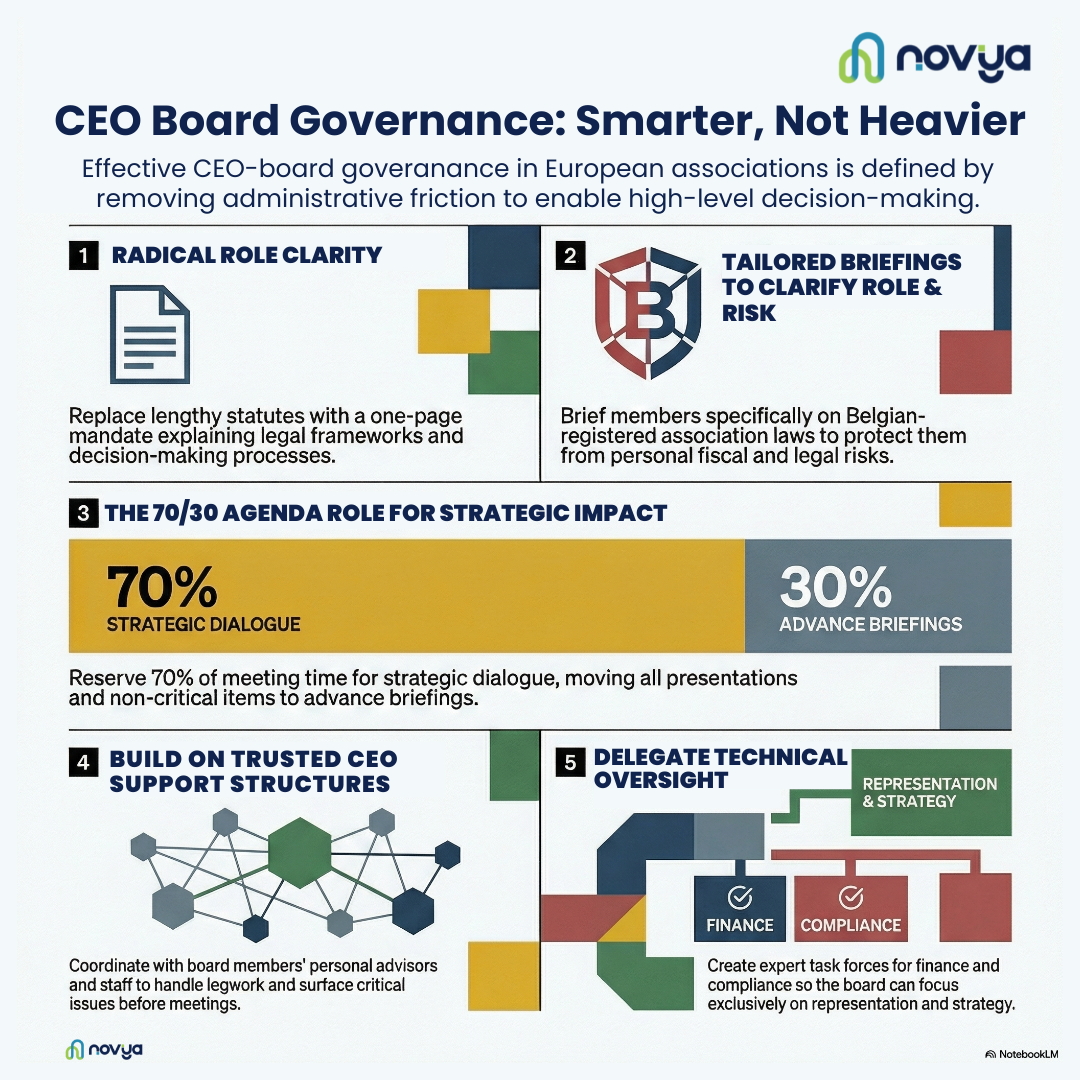
1. A clear mandate on day one
Not 40 pages of statutes or internal regulations — one page explaining what the role requires, in which legal framework they operate, how decisions are made, and what recurs every year. Simple, practical, actionable.
2. Tailored role onboarding
Boards of Belgian-registered associations carry real legal and fiscal responsibilities that can carry personal liability. Most do not know this. A clear, personalized briefing on the role, the legal framework and its implications is not a luxury. It is a minimum.
CEOs work through trusted advisors — let them. Don’t expect C‑level members to do the legwork. Provide clear briefings to their key staff and hold short prep calls so the board gets the issues surfaced and decision‑ready, allowing members to bring their strategic strength to the meeting.

Send a concise briefing package in advance (at least 7 days ahead) to ensure time for internal discussions within the board members' organisations. Start with an executive summary that outlines implications and options, moving in-depth analysis to the appendix. During the board meeting, reserve 60–70% of meeting time for real dialogue, not presentations. Table non‑conflictual, non‑critical items in order to move through them quickly without further discussion.
Key board members should be briefed directly by the secretariat — not just receive documents. A trusted Secretary General who prepares, anticipates, and never lets the president walk into a room unprepared is worth more than any governance manual. A timely briefing call keeps the most important relationships in the association working in sync and avoids unnecessary surprises during your board meeting.

The incoming president of an association should not have to reconstruct years of institutional memory from scratch. Overlap periods, structured handovers, and a living decision log protect the association — and the individuals who lead it.
A C‑level board should focus on strategy and representation — not on day‑to‑day control of accounts, processes or compliance. Create expert task forces to to carrie out these critical duties (finance & audit, compliance, etc.) and report to the board. That way oversight is guaranteed, roles are clearly divided, and the board can concentrate on high‑level decisions with confidence.
So what?
When your board is made up of CEOs, the stakes are different — time is tighter, reputations and personal risk are higher, and expectations for impact are immediate. That means governance can’t be heavier; it must be smarter.
The practical moves above do three things at once:
- protect individual board members,
- free the board to focus on strategy, and
- give the secretariat the tools to deliver decision‑ready briefings.
The result is faster, more confident decisions, fewer surprises, and an association that stays resilient as leadership changes.
Ready to make your C‑level board work the way it should?